
If you’re searching for a home insulation guide, you’re likely looking for clear, practical answers on how to make your home more energy-efficient, comfortable, and cost-effective year-round. With rising energy bills and changing weather patterns, proper insulation isn’t just an upgrade — it’s a necessity.
This article is designed to walk you through the fundamentals of home insulation, from understanding different material options to identifying problem areas and knowing when to DIY or call in a professional. Whether you’re renovating, building new, or simply trying to fix drafty rooms, you’ll find straightforward guidance tailored to real-world home setups.
Our recommendations are based on current building standards, energy-efficiency research, and proven home improvement practices. We focus on practical solutions that homeowners can confidently apply.
By the end, you’ll understand how insulation works, where it matters most, and how to make smart decisions that improve comfort while reducing long-term energy costs.
Unlock Lower Bills and Year-Round Comfort
High energy bills. Drafty rooms. That one bedroom that’s freezing in winter and stuffy in July. Sound familiar? Poor insulation is often the hidden culprit, quietly draining your wallet month after month (yes, even in newer homes).
Many guides skim the surface, but few explain how air leaks, R-values (a measure of thermal resistance), and climate zones work together. This home insulation guide breaks it down with:
- The right insulation types for each space
- Priority target areas (attics, walls, crawlspaces)
- A clear DIY vs. professional cost comparison
Because comfort shouldn’t feel seasonal—or expensive.
Decoding Insulation: What R-Value Really Means for You
R-Value is simply a measure of thermal resistance—how well insulation resists heat flow. The higher the number, the better it blocks heat (think of it as a winter coat rating for your house).
So why does it matter? In winter, higher R-Values keep warmth inside. In summer, they keep heat out. In other words, your HVAC system gets a break—and your wallet might too.
General guidelines:
- Attic: R38–R60
- Walls: R13–R21
- Floors: R19–R30
For more details, see our home insulation guide. Choose wisely; your comfort depends on it year-round comfort.
Choosing Your Material: A Breakdown of the Big Three
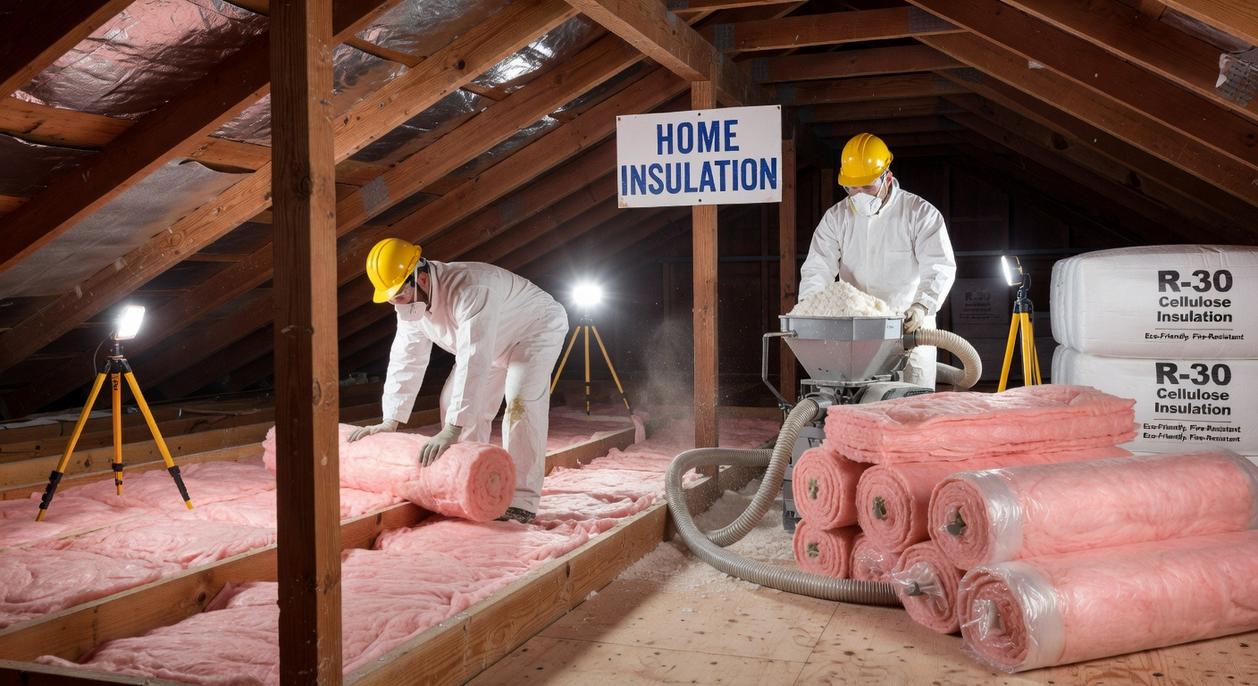
Picking insulation isn’t just a technical decision—it’s a comfort decision. (Cold floors in January have a way of making this very personal.) Let’s break down the big three.
Fiberglass (Batts and Rolls)
Fiberglass is made of fine glass fibers woven into batts or rolls. It’s the pink stuff you’ve probably seen in attics on home renovation shows.
Pros: Cost-effective, widely available, and DIY-friendly. If you’re reasonably handy, you can install it yourself.
Cons: It can irritate skin and lungs during installation, and it loses R-value (thermal resistance) when compressed. In my opinion, it’s solid for tight budgets—but only if installed carefully.
Cellulose (Blown-In)
Cellulose is primarily recycled paper treated for fire resistance.
Pros: It fills irregular spaces beautifully and offers excellent sound dampening. Great for older homes with quirky framing.
Cons: It can settle over time, reducing effectiveness, and requires special blowing equipment. I like it for retrofits, but settling is a real downside.
Spray Foam (Open and Closed-Cell)
Spray foam is applied as a liquid that expands into a solid barrier.
Pros: Creates an airtight seal, delivers a high R-value per inch, and can add structural rigidity.
Cons: It’s the most expensive option and requires professional installation. Still, if energy efficiency is your top priority, this is the gold standard.
| Material | Cost | DIY? | Key Strength |
|---|---|---|---|
| Fiberglass | Low |
Yes | Budget-friendly |
| Cellulose | Moderate | No | Fills gaps well |
| Spray Foam | High | No | Airtight seal |
If you’re unsure, reviewing a detailed home insulation guide can help clarify which material matches your goals.
The Insulation Heatmap: Where to Focus for the Biggest Wins
When it comes to cutting energy bills, not all areas of your home are equal. If you want the biggest return on effort and budget, think of insulation as a heatmap—bright red zones first, lighter areas later.
Priority #1: The Attic
Heat rises (basic physics, not just an old saying), which makes the attic your number-one target. According to the U.S. Department of Energy, a poorly insulated attic is one of the biggest sources of heat loss in a home.
Start with the attic floor. Lay fiberglass batts or blow in cellulose insulation between joists to reach the recommended R-value for your climate zone. Next, insulate rafters if the attic is conditioned space. Finally, seal and insulate the attic access hatch using rigid foam board and weatherstripping (this small gap can leak more air than you’d expect).
Priority #2: Walls (Exterior and Basement)
Next, move to exterior walls. Insulating wall cavities usually requires removing drywall or adding blown-in insulation—best tackled during renovations. However, the payoff is significant in both comfort and energy savings.
Basement walls are equally critical. Uninsulated concrete bleeds heat and attracts moisture. Install rigid foam board directly against foundation walls and seal seams carefully. This not only reduces heat loss but also limits condensation, which can lead to mold.
Priority #3: Floors and Crawl Spaces
Cold floors above garages or crawl spaces? Insulate between floor joists with fiberglass batts and secure them with wire supports. In crawl spaces, always install a vapor barrier on the ground before insulating. This plastic sheeting blocks ground moisture from rising into your home.
Quick Win: Rim Joists
Finally, check rim joists—the perimeter framing in basements or crawl spaces. Cut rigid foam to fit each cavity and seal with spray foam. It’s a fast, high-impact DIY upgrade.
For more essential home maintenance tasks every homeowner should know, stay proactive. A solid home insulation guide turns small upgrades into big savings.
DIY Project or Professional Job? A Practical Decision Guide
Deciding whether to DIY or call a pro is like choosing between cooking at home or dining at a restaurant. Some meals are simple; others require a trained chef.
When to DIY
Projects like attic top-ups with batts or rolls and insulating rim joists are manageable for confident homeowners. Think of them as swapping out a light fixture—straightforward if you follow instructions. Wear gloves, masks, and eye protection (fiberglass is not a souvenir you want to keep). A good home insulation guide can act like your recipe card, walking you step by step.
When to Hire a Pro
Spray foam, dense-pack cellulose in existing walls, or removing old insulation is more like rewiring your kitchen. These tasks require specialized tools and certified training to ensure safety and proper air sealing.
Cost vs. Benefit
Professional installation costs more upfront, but it often delivers tighter air seals and performance guarantees—like investing in a quality winter coat that actually keeps the cold out.
Creating a complete thermal envelope means sealing every gap where conditioned air escapes—attics, rim joists, crawl spaces, even those drafty Cape Cod dormers common in Northeast winters. The goal is stop energy waste before it spikes your utility bill. The solution? Match the material to the space—spray foam for irregular cavities, blown-in cellulose for older plaster walls, rigid board for basement slabs. If you’re unsure, start small. Grab a flashlight and inspect attic for thin spots or compressed batts. A audit (utilities offer rebates) can guide next move with a home insulation guide. Start there. This week before winter.
Bring Comfort and Efficiency Back to Your Home
You started this journey because you wanted a clearer understanding of how to make your home more comfortable, energy-efficient, and cost-effective. Now you have the insights to take control. From identifying problem areas to choosing the right materials, this home insulation guide has equipped you with practical knowledge to reduce energy waste and create a more consistent indoor climate.
Poor insulation leads to rising utility bills, uneven temperatures, and constant strain on your HVAC system. That discomfort and unnecessary expense don’t have to continue. When your home is properly insulated, you feel the difference every single day — and you see it in your monthly savings.
The next step is simple: assess your current insulation, identify the weakest areas, and start upgrading strategically. If you’re ready to stop losing money through your walls and attic, take action now. Explore proven insulation solutions, follow expert-backed recommendations, and transform your space into a smarter, more efficient home. The comfort you’ve been looking for is within reach — start improving your insulation today.
 As the primary technical strategist for Ththomable, Chasevsic Rieder focuses on the intersection of smart technology and domestic efficiency. He is responsible for demystifying complex home automation systems and providing the DIY improvement tips that allow users to modernize their infrastructure without unnecessary stress. Chasevsic’s expertise ensures that "smart living" is accessible and reliable, offering a tactical approach to home fundamentals that prioritizes performance and long-term optimization. His work empowers the community to build smarter, more responsive homes through precise, expert-backed guidance.