If you’re searching for insight into future home design trends, you’re likely looking for more than just inspiration—you want practical ideas that make your space smarter, more functional, and ready for what’s next. Home design is evolving quickly, blending technology, sustainability, and personalized comfort in ways that reshape how we live every day.
In this article, we break down the most important future home design trends influencing modern interiors, smart living setups, and DIY-friendly upgrades. From energy-efficient layouts to multi-functional spaces and integrated tech solutions, you’ll discover what’s gaining momentum and how to apply it in your own home.
Our insights are grounded in extensive research across design publications, conversations with industry professionals, and hands-on analysis of emerging home innovations. Whether you’re renovating, redecorating, or planning from scratch, this guide will help you understand what’s coming next—and how to design a home that stays ahead of the curve.
Beyond the Current Trend: Envisioning Your Next Home
Modern Farmhouse had its moment. But when every third new build has black-framed windows and shiplap, “unique” starts feeling copy‑paste (you’ve seen the Instagram grid). Zillow reports that design-heavy keywords lose price premiums once they saturate markets, proving trends age fast.
This guide explores future home design trends grounded in evidence:
- Sustainability: Energy-efficient homes can command up to 5% higher resale values (National Association of Realtors).
- Integrated technology: Smart-home adoption has surpassed 60% of U.S. households (Statista).
- Biophilic design: Natural light and greenery measurably improve well-being (Harvard T.H. Chan School).
Plan boldly—data favors homes built for tomorrow.
Biophilic Design: Where Architecture Meets Nature
Biophilic design sounds technical, but the idea is simple. It’s the practice of designing buildings that CONNECT people to nature in a deep, structural way. Not just a fern in the corner (though plants help). True biophilic architecture weaves natural systems, light patterns, airflow, and organic materials directly into the bones of a space.
Let’s clarify a key term: natural systems refers to processes like sunlight cycles, ventilation, water movement, and plant growth. Instead of fighting these forces, biophilic homes work WITH them.
Key Architectural Elements
Common features include:
- Living walls that function as vertical gardens and improve indoor air quality (NASA research has shown plants can reduce certain indoor pollutants).
- Interior courtyards that bring daylight and greenery into the center of a home.
- Large-scale glass installations to maximize NATURAL LIGHT exposure.
- Raw materials like rammed earth, reclaimed timber, and natural stone (materials that age gracefully rather than wear out).
Practical Application
A floor plan can follow the sun’s path, placing living spaces where morning or afternoon light naturally falls. Rainwater harvesting systems can be integrated visibly—turning gutters and collection basins into aesthetic features rather than hiding them.
Human-Centric Benefits
Studies published in the Journal of Environmental Psychology show nature-integrated spaces reduce stress and improve cognitive performance. The indoor-outdoor flow isn’t just pretty—it supports WELL-BEING.
That’s why biophilic thinking is shaping future home design trends in a meaningful, science-backed way.
The Evolution of Minimalism: The Rise of “Warm Brutalism”
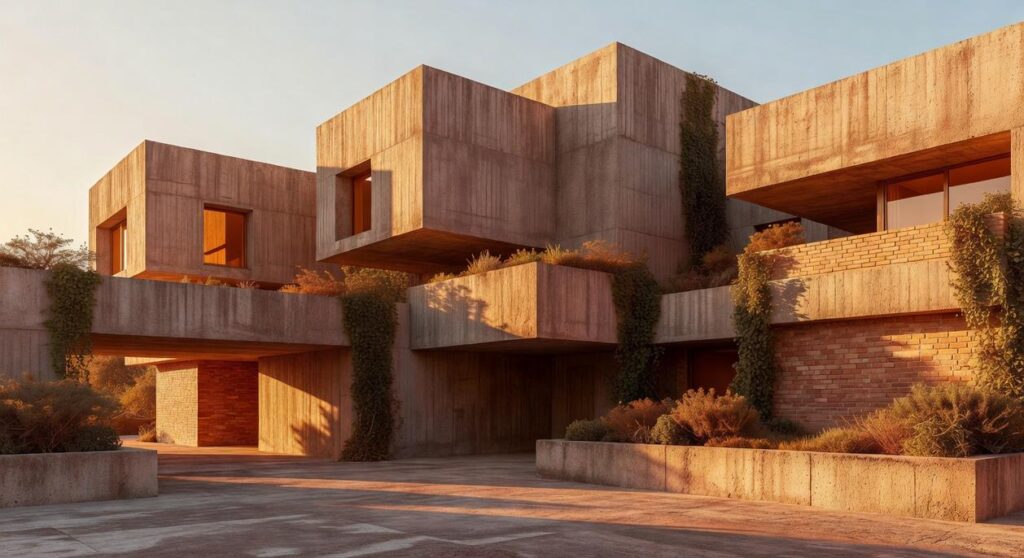
If you’ve ever walked into a minimalist home and thought, Why does this feel like a stylish waiting room?—you’re not alone. Stark white walls, sharp edges, and zero personality can feel more cold than calming. That frustration is exactly why Warm Brutalism is gaining traction among future home design trends.
Warm Brutalism is a sophisticated evolution of minimalism. It keeps Brutalism’s raw honesty—board-formed concrete walls (concrete that preserves the texture of wooden molds), exposed structural steel, and bold geometric forms—but softens them with light oak cabinetry, plush textiles, and generous natural light. Think less government building, more high-end retreat.
Traditional Brutalism often prioritized monumentality over comfort (great for city halls, less great for Sunday mornings). Warm Brutalism flips that script. It centers human livability—acoustic softness, layered lighting, and tactile contrast—without hiding the structure. The result feels grounded, not sterile.
There’s also a practical upside. Those clean planes and honest materials create a perfect canvas for DIY upgrades, like building simple plywood shelving or platform beds that echo the architecture. The beauty is in the structure itself. Even smart home tech blends in seamlessly—recessed lighting strips, hidden speakers, and flush-mounted panels stay visually quiet.
If you crave minimalism without the chill, Warm Brutalism offers balance. For a complementary approach rooted in nature, explore how biophilic design enhances well being at home.
Parametricism & 3D Printing: The New Shape of Home
Parametric design sounds intimidating, but it simply means using algorithms to generate shapes based on set rules. Instead of sketching every curve by hand, architects adjust inputs—light, airflow, materials—and the software produces fluid, organic forms once impossible to calculate. Think honeycombs or seashells translated into walls. Traditional homebuilding relies on straight lines and standardized parts; parametricism favors complexity and customization. Critics argue that this approach is expensive and overly experimental (fair point, given early prototypes). Yet compare A vs B: a conventional boxy house versus a 3D-printed, performance-optimized shell designed to reduce material waste and energy loss. Additive manufacturing—building layer by layer—turns intricate digital models into physical structures with remarkable precision. Compared side-by-side, traditional construction cuts excess material away; 3D printing adds only what is needed. The result is faster timelines, reduced waste, and curving facades that feel grown rather than assembled. Visual hallmarks include non-linear walls, lattice-like frames, and interiors shaped for natural light flow. As future home design trends evolve, parametricism promises homes tailored to climate, lifestyle, and personality—less copy-paste suburbia, more bespoke habitat. Pro tip: start with small printed features before committing to a full structure today now.
Designing a Home That Lasts
Trends come and go. Principles endure.
When you zoom out, today’s most compelling styles—Biophilic design, Warm Brutalism, and Parametricism—share deeper themes: authenticity, sustainability, and personalization. Biophilic design emphasizes a connection to nature through natural light, ventilation, and organic materials (a response to research linking nature exposure to reduced stress and improved well-being, per the Environmental Protection Agency). Warm Brutalism softens raw concrete and bold forms with tactile fabrics and earthy tones. Parametricism uses algorithm-driven forms to create fluid, futuristic spaces powered by advanced modeling software.
At first glance, critics argue these are just aesthetic cycles. Why not wait them out? After all, avocado-green kitchens once felt revolutionary too. Fair point. However, the real shift isn’t visual—it’s philosophical. Homeowners are prioritizing longevity, energy efficiency, and emotional resonance over surface-level décor.
In other words, the pain of an outdated home isn’t solved by repainting walls every five years. It’s solved by embracing foundations that adapt with you.
So, what resonates most with your lifestyle? Do you crave daily sunlight and indoor greenery? Lean Biophilic. Prefer bold architectural statements that still feel livable? Explore Warm Brutalism. Drawn to sculptural, tech-forward spaces? Parametricism may be your lane.
Unlike competitors who focus solely on finishes, consider infrastructure too—insulation, smart zoning, and durable materials (pro tip: invest in what you don’t see; it pays off longer).
Ultimately, use these future home design trends as a conversation starter with your architect or designer. When guided by values rather than fads, your next home won’t just look current—it will feel timeless.
Design Your Home With Confidence and Clarity
You came here looking for practical guidance, fresh inspiration, and smart ways to elevate your living space. Now you have a clearer understanding of what makes a home functional, beautiful, and aligned with future home design trends.
Your biggest challenge wasn’t a lack of ideas — it was knowing which ideas actually work for your space, your lifestyle, and your budget. When every room feels disconnected or outdated, it creates daily frustration. But with the right approach to layout, décor, and smart upgrades, your home can finally feel intentional and cohesive.
Now it’s time to take action. Start with one space. Apply one smart upgrade. Refresh one design element that aligns with the direction you want your home to go. Small, strategic improvements create lasting impact.
If you’re ready to stop second-guessing your home decisions and start building a space that truly works for you, explore more expert-backed home insights and step-by-step DIY guidance today. Get the clarity you need, the inspiration you crave, and the confidence to transform your home the right way.
 Evelyna Fleshericard serves as a lead editorial voice at Ththomable, where her keen eye for aesthetic balance and functional elegance shapes the platform’s décor and style initiatives. With an extensive background in contemporary interior design, she specializes in translating abstract "modern inspiration" into actionable layouts for the everyday homeowner. Evelyna’s contributions are centered on the philosophy that a home should be a curated reflection of one's personality, and she consistently provides readers with the high-end design principles and specialty insights needed to achieve a premium, sophisticated living environment.