Most homeowners don’t think twice about their plumbing—until a leak stains the ceiling or a drain refuses to clear. When problems strike, confusion often leads to stressful and expensive emergency calls. This guide pulls back the curtain on your home’s hidden network, explaining the plumbing system basics that control how water enters, moves through, and exits your house. By understanding the core components and simple principles at work, you’ll be better prepared to handle routine maintenance, troubleshoot common issues, and speak confidently with professionals. The insights shared here are grounded in practical, field-tested knowledge of real residential home systems.
The Two Core Systems: Supply and Drainage
Every home runs on two separate but connected networks, and understanding them pays off immediately. When you grasp these plumbing system basics, you make smarter repair decisions, avoid costly mistakes, and talk to contractors with confidence (which usually means fewer surprise invoices).
1. Water Supply System (Inbound)
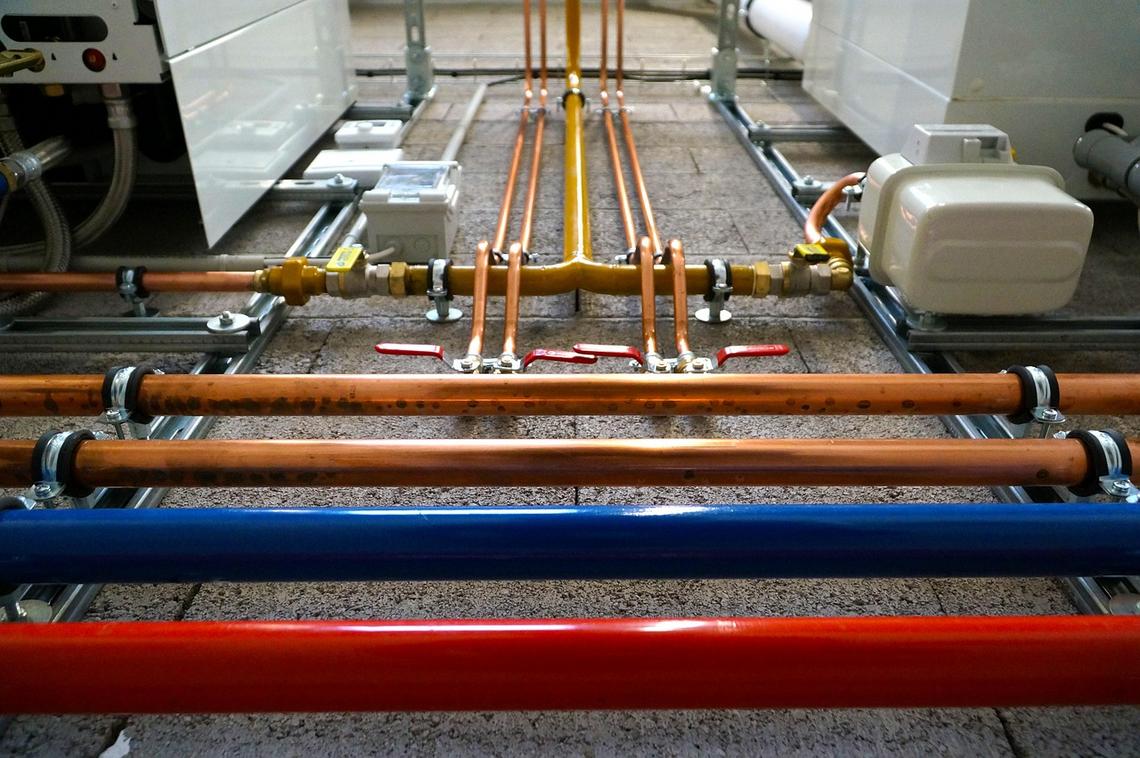
First, the water supply system brings clean, potable water into your home under pressure. That pressure is what makes water flow the moment you turn a faucet handle. Without it, you’d have a sad trickle instead of a steady stream. Common materials include copper, PEX, and CPVC—each chosen for durability, flexibility, or cost-effectiveness.
Your benefit:
- Faster troubleshooting of leaks
- Smarter upgrade choices
- Better protection against water damage
2. Drain-Waste-Vent System (Outbound)
In contrast, the drain-waste-vent (DWV) system relies on gravity, not pressure. It carries wastewater and solids downhill and safely out of your home. PVC and ABS plastic are common here because they’re lightweight and corrosion-resistant.
Think of it like a city: pressurized water mains deliver fresh water, while a separate sewer system slopes downward to remove waste.
Understanding both systems also complements broader home knowledge, like home insulation 101 what you need to know, helping you maintain a safer, more efficient house overall.
Pressurized Power: A Deep Dive into the Water Supply System
Turn on your kitchen faucet and you hear it—that steady rush of water under pressure, like a miniature waterfall trapped in the walls. But that sound starts far beyond your sink.
The Point of Entry
Water enters your home from a municipal main (or a private well), pushing through an underground service line and into your basement or utility area. It passes the water meter—quietly ticking away as it measures every gallon—before reaching the main shutoff valve. That valve is your home’s emergency brake. If a pipe bursts and water is spraying like a scene from Titanic, this is what stops the flood.
Some homeowners assume they’ll “figure it out” when the time comes. That’s risky. Actionable tip: locate your main shutoff valve now, test it gently, and make sure everyone in the household knows where it is. In plumbing emergencies, seconds matter (and drywall soaks fast).
The Hot and Cold Divide
From there, the main cold line splits. One branch sends crisp, cold water directly to fixtures. The other feeds the water heater, where water warms and expands before traveling through its own parallel pipes. When you adjust your shower handle, you’re blending these two streams—simple plumbing system basics in motion.
Fixtures and Valves
Sinks, toilets, and showers are the visible endpoints. Beneath most sinks and behind toilets sit small angle stop valves. These let you silence the hiss of running water to one fixture without shutting down the whole house. Some argue they’re unnecessary. Until a toilet won’t stop refilling at 2 a.m. (trust me, you’ll be grateful).
Gravity and Air: Uncovering the Drain-Waste-Vent (DWV) System
Most homeowners never think about what happens after water disappears down the drain (out of sight, out of mind, right?). But understanding your DWV system is one of the smartest plumbing system basics you can learn.
The “D” and “W”: Drain and Waste
Every drainpipe relies on gravity. That’s why pipes are installed with a precise downward slope—typically ¼-inch per foot. This pitch ensures wastewater flows smoothly toward the sewer or septic line.
If the slope is too flat, waste lingers and clogs form. Too steep? Liquids outrun solids, leaving buildup behind. My recommendation: if you’re planning a remodel, insist your contractor verifies proper pitch before closing walls. A small measurement error can cause years of slow drains.
The Importance of Traps
That U-shaped pipe under your sink is called a P-trap. It holds a small amount of water that forms a seal, blocking harmful sewer gases from entering your home. According to the International Residential Code (IRC P3201), every plumbing fixture must have a trap to prevent gas intrusion.
If you notice sewer smells, first check for a dry trap—especially in unused bathrooms. Running water for 30 seconds often fixes the issue.
The “V”: Vent
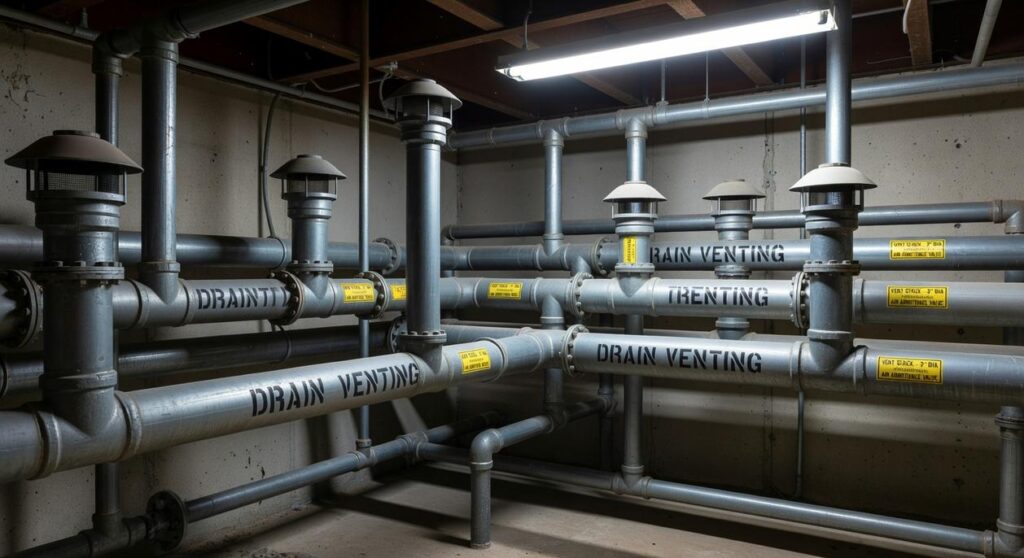
The vent system is the most misunderstood part. Vent pipes exit through the roof to allow air into the drainage system, preventing a vacuum. Without venting, water gets siphoned from traps, causing gurgling drains.
Think of a soda bottle turned upside down. It “glugs” because air can’t enter. Poke a hole in the top, and it pours smoothly. Your vent does the same.
Recommendation: If drains gurgle, call for a vent inspection before snaking the line. The problem may be airflow—not a clog.
Key Components and DIY Checkpoints
Let’s start with plumbing system basics. First, the water heater heats and stores hot water. “If you don’t check the T&P relief valve once a year, you’re gambling,” a plumber once told me. The Temperature & Pressure (T&P) relief valve releases excess pressure—think of it as a safety escape hatch.
Next, cleanouts are capped pipes that give access to drain lines. “They’re your shortcut to clearing clogs,” as one contractor put it.
Meanwhile, fixtures—faucets, toilets, showers—are the visible endpoints.
Finally, valves like the main shutoff and angle stops control water flow when emergencies strike.
Putting Knowledge into Practice for a Healthier Home
You set out to understand how your home’s plumbing really works—and now you do. With a clear grasp of the two separate systems—supply and DWV—and the roles of pressure, gravity, and venting, those once-confusing pipes make sense. Mastering plumbing system basics replaces uncertainty with confidence, whether you’re fixing a minor leak or speaking with a professional.
This knowledge isn’t just theory—it’s protection. It helps you prevent costly damage, spot warning signs early, and avoid expensive emergencies.
Start now: take five minutes to locate and label your main water shutoff valve. That simple step could save you thousands when it matters most.